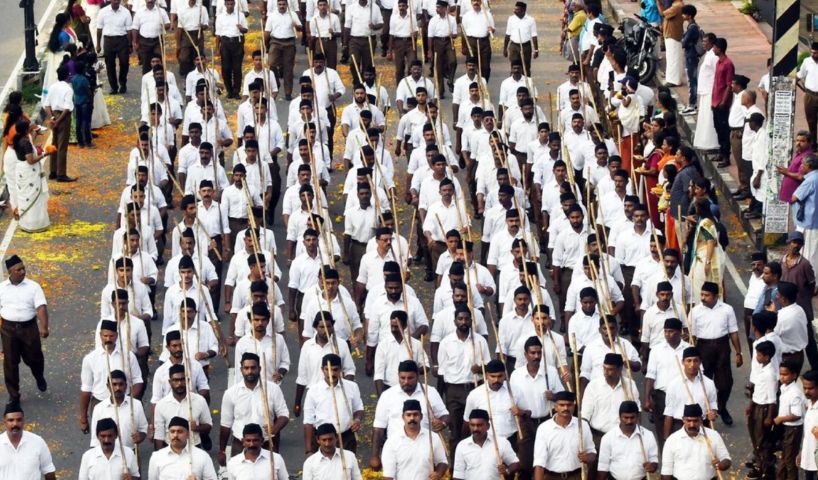
New Delhi: Recent online discussions have brought RSS Chief Shri Mohan Bhagwat into the spotlight, with some social media users posting misleading videos and making controversial claims about the organization. In response, supporters have urged a more informed perspective on the Rashtriya Swayamsevak Sangh (RSS) and its broader role in Indian society.
The Structure of RSS and Its Sub-Organizations
The RSS functions through several sub-sections that operate across different spheres of society. These include:
– Vishwa Hindu Parishad (VHP), an organization focused on religious and social activities.
– Akhil Bharatiya Vidyarthi Parishad (ABVP), the student wing advocating nationalistic values in education.
– Bharatiya Janata Party (BJP),** the political arm associated with governance and policy-making.
Amidst growing criticism, supporters argue that those commenting on the RSS should possess a factual understanding of its organizational structure and purpose.
Engagement with Religious Communities
In an effort to promote national unity, the RSS has also extended its reach to religious minorities through platforms such as:
– Rashtriya Muslim Manch (RMM), which engages with members of the Muslim community.
– Rashtriya Christian Manch (RCM), aimed at fostering dialogue with Christian groups.
This outreach has often been misinterpreted, with critics alleging ideological compromises. However, sources within the RSS maintain that these initiatives are part of a larger vision of national integration, rather than concessions to any particular group.
The Leadership and Vision of RSS
As the highest-ranking leader of the RSS, the Sar Sangh Chalak holds a position of significant influence. His decisions, supporters argue, are driven by a long-term vision aimed at strengthening India’s cultural and national identity.
The RSS, often described as “an industry that nurtures patriots,” has positioned itself as a key force in the preservation of Sanatan Dharma and in shaping India’s socio-political landscape. With its century-long history, the organization claims to be working toward national unity rather than religious polarization.
A Call for Informed Discourse
Defenders of the RSS argue that the organization has never advocated violence or communal division, despite persistent criticisms. As it approaches its 100th anniversary, they emphasize the need for a more balanced perspective.
Quoting Mohan Bhagwat, supporters recall his previous statement: “All those who are present in India today are, in essence, descendants of former Hindus.” This, they argue, is not an attempt to rewrite history but rather an appeal to shared cultural heritage.
As discussions around the RSS continue, observers urge that criticisms and debates be based on verifiable information rather than assumptions or viral misinformation.